 VapeWholesaleHub
Mech Mod Import Duty Planning for Distributors — Oceania
If you are comparing mech mod suppliers right now, you are probably looking at three quotes that look identical and cost very different amounts. That gap usually comes down to cell grade, coil consistency and how honest the factory is about tolerances. Let us unpack it.

Getting Mech Mod to Your Warehouse
Ask your forwarder for the mech mod transit history on your lane, not the advertised schedule. The gap between the two is the buffer you should build into your reorder point.
Freight is the hidden half of mech mod unit economics. A denser master carton can save more per unit than a hard negotiation on factory price, because the saving repeats on every reorder rather than once.
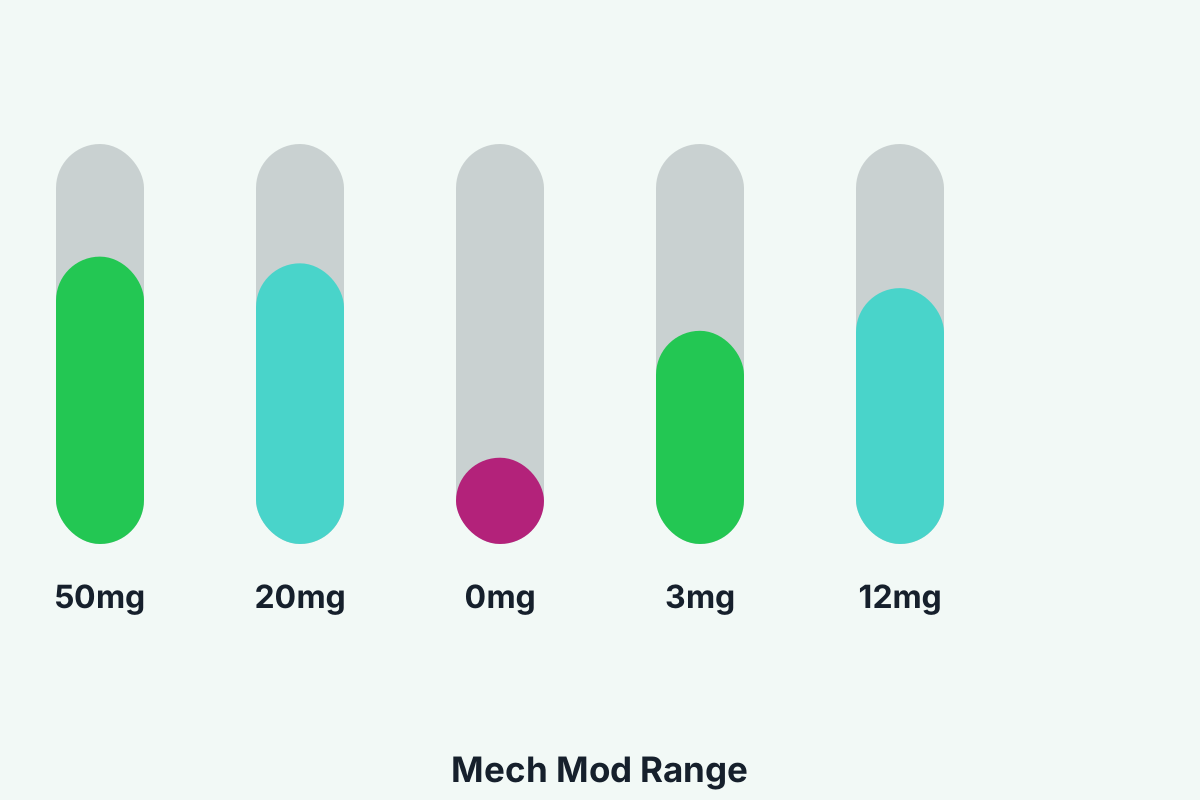
Where Mech Mod Sits in the Range
A tight mech mod range with deep availability usually outsells a wide range with thin stock. Customers who find their line in stock come back; customers who are told to wait do not.
Category planning for mech mod works best when you map it against three shopper types: the restocker who already knows what they want, the switcher who wants something stronger, and the explorer who buys on flavour name alone.
Modelling a Healthy Margin
Hold a small mech mod buffer in your pricing model for currency movement. A few percent on a container is a real number, and it is easier to plan for than to absorb.
Indicative reference points for planning purposes: entry tier from USD 1.07 per unit at 2000 units, mid tier at USD 1.42, and volume tier at USD 0.62 for full container quantities. These figures move with specification, packaging and freight, so treat them as a shape rather than a quote.
Market Signals
One shift worth planning for: shorter mech mod reorder cycles with smaller average drops. It favours suppliers with flexible production slots over those who only want large annual commitments.
Traceability is moving from a nice-to-have to a requirement in several mech mod markets. Building the habit now is cheaper than retrofitting record keeping under pressure later.
The Specification That Matters
Pay attention to how a mech mod supplier responds when you ask for a tolerance they do not want to commit to. The hesitation is usually more informative than the eventual answer.
Specification sheets are where a mech mod deal is won or quietly lost. Two samples can look and taste the same while using different coil wire, different wicking density and different tolerances on the mouthpiece. Those details decide how the unit behaves in week three rather than minute three.
| Product category | Open system |
|---|---|
| Resistance band | 0.6 - 0.8 ohm |
| Capacity tolerance | +/- 3% |
| Puff count method | Machine cycle 2s on / 18s off |
| Master carton | 100 units |
| Carton weight | 11.0 kg |
| Shelf life | 18 months |
| Storage | 15-25 C, dry, away from direct light |
Practical Checklist
- Rotate stock by batch code rather than by delivery date.
- Check carton dimensions against your freight quote before confirming.
- Keep sealed retained samples from every production batch.
- Ask how the factory measures puff count, then compare like with like.
- Start with a mixed carton and let your own sell-through decide.
- Agree the tolerance band in writing before approving artwork.
Frequently Asked Questions
Do you hold stock for regular customers?
For established programmes we can reserve production slots and, in some cases, hold finished mech mod stock against a forecast. It removes most of the lead time risk from a reorder and is worth discussing once volumes are stable.
How are price changes handled on repeat orders?
{K} pricing is reviewed against input costs and volume rather than adjusted casually. Any change is confirmed in writing before the next order is scheduled, with the reason stated so you can judge it yourself.
Can you match an existing product I already sell?
Often yes, provided we can measure it properly. Send a physical sample and we will report back on what can be matched, what will differ slightly, and why. An honest gap is more useful than a vague promise.
Can I visit the production facility?
Yes, and we encourage it for larger programmes. Visits are most useful when you already have a draft specification, because you can then check the specific processes behind the numbers you care about.
What if a batch does not match the sample?
Keep the retained samples from the approval stage. If a delivered batch measurably differs, we compare against the retained set and resolve it against the production record. This is why we insist on sealed retained units from every run.
Next Step
The best mech mod programmes we see are run by buyers who write things down. Specifications, batch records, complaint thresholds - the paperwork is the advantage.
Related Reading
- Mech Mod Handling, Labeling and Regulatory Paperwork — Updated for 2026
- Mech Mod Electronic Data Interchange for Large Accounts — Seasonal Demand Peaks
- Private Label Mech Mod: Steps From Idea to Carton — the Middle East
- Mech Mod Warranty and After Sales: Setting Expectations — 2026 Buyer Notes
- Mech Mod Handling, Labeling and Regulatory Paperwork — High Volume Buyers
- Mech Mod Payment Terms and Risk Management — a Printable Checklist